 fy@fuyigz.com
 0086-519-80181222
Share to




News & Events
Understanding DG to Roll Granulators: Types and Applications
Release time: 2024-09-05
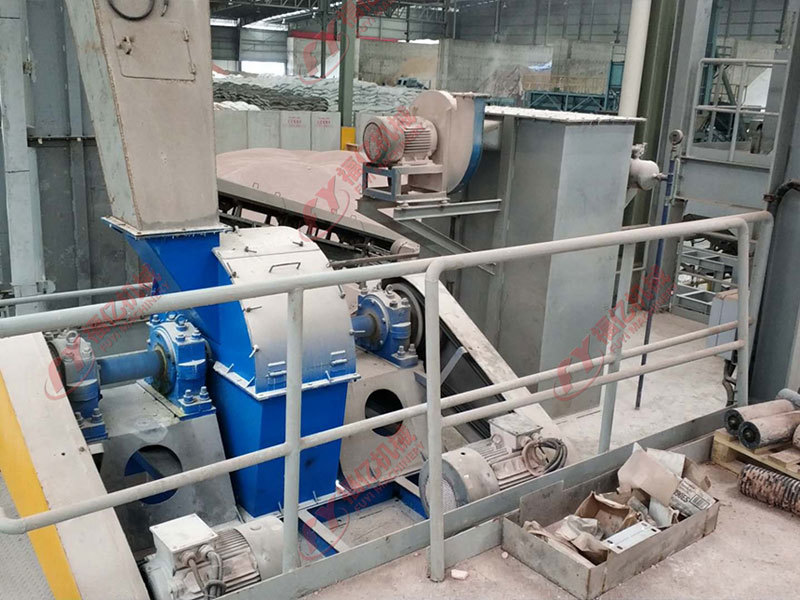
DG to roll granulators, commonly known in the manufacturing sector, are essential machines utilized in the production of granulated materials. These granulators function by compressing powdery substances into granules through a series of rolls. The effectiveness of DG to roll granulators lies in their ability to produce uniform granules that are crucial for various downstream processes. This article discusses the types of DG to roll granulators available and their respective applications.
### Types of DG to Roll Granulators
1. **Flat Die Granulators**: These machines use a flat die to form granules. They are ideal for producing small quantities of granules and are often used in laboratories or small-scale production settings. The simplicity of their design allows for easy maintenance and operation.
2. **Ring Die Granulators**: Featuring a cylindrical die, ring die granulators are suitable for larger production volumes. They offer high efficiency and are commonly employed in industries that require substantial granule output, such as the food, pharmaceutical, and chemical industries. The design enables continuous material feed, which enhances productivity.
3. **High-Pressure Granulators**: These granulators are designed to operate under high pressure, resulting in dense and durable granules. They are particularly beneficial for applications that require granules with specific physical properties, such as in the production of fertilizers or specific chemical compounds.
4. **Low-Pressure Granulators**: In contrast, low-pressure granulators function at lower pressures, making them ideal for materials that are sensitive to heat or pressure. They are often used in the production of pharmaceuticals and food products where ingredient integrity is paramount.
### Applications of DG to Roll Granulators
DG to roll granulators are versatile and find applications across various fields. In the **pharmaceutical industry**, they are used to produce granules for tablet formulation, ensuring uniformity and dissolution rates. In the **chemical sector**, these granulators facilitate the production of granules used in coatings, pigments, and other chemical formulations.
The **fertilizer industry** also benefits significantly from DG to roll granulators. They are essential in producing granulated fertilizers that ensure efficient nutrient delivery to plants. Additionally, in the **food industry**, these machines are employed to create granules for seasoning, additives, and other food products, maintaining consistent quality and texture.
In conclusion, DG to roll granulators play a vital role in various industrial applications. Their ability to produce high-quality granules efficiently makes them indispensable in sectors ranging from pharmaceuticals to agriculture. Understanding the different types of DG to roll granulators and their specific applications can help businesses choose the right equipment to enhance their production processes.
### Types of DG to Roll Granulators
1. **Flat Die Granulators**: These machines use a flat die to form granules. They are ideal for producing small quantities of granules and are often used in laboratories or small-scale production settings. The simplicity of their design allows for easy maintenance and operation.
2. **Ring Die Granulators**: Featuring a cylindrical die, ring die granulators are suitable for larger production volumes. They offer high efficiency and are commonly employed in industries that require substantial granule output, such as the food, pharmaceutical, and chemical industries. The design enables continuous material feed, which enhances productivity.
3. **High-Pressure Granulators**: These granulators are designed to operate under high pressure, resulting in dense and durable granules. They are particularly beneficial for applications that require granules with specific physical properties, such as in the production of fertilizers or specific chemical compounds.
4. **Low-Pressure Granulators**: In contrast, low-pressure granulators function at lower pressures, making them ideal for materials that are sensitive to heat or pressure. They are often used in the production of pharmaceuticals and food products where ingredient integrity is paramount.
### Applications of DG to Roll Granulators
DG to roll granulators are versatile and find applications across various fields. In the **pharmaceutical industry**, they are used to produce granules for tablet formulation, ensuring uniformity and dissolution rates. In the **chemical sector**, these granulators facilitate the production of granules used in coatings, pigments, and other chemical formulations.
The **fertilizer industry** also benefits significantly from DG to roll granulators. They are essential in producing granulated fertilizers that ensure efficient nutrient delivery to plants. Additionally, in the **food industry**, these machines are employed to create granules for seasoning, additives, and other food products, maintaining consistent quality and texture.
In conclusion, DG to roll granulators play a vital role in various industrial applications. Their ability to produce high-quality granules efficiently makes them indispensable in sectors ranging from pharmaceuticals to agriculture. Understanding the different types of DG to roll granulators and their specific applications can help businesses choose the right equipment to enhance their production processes.
Keywords: dg to roll granulator

language
English
العربية
বাংলাদেশ
Български
Hrvatski
Česky
Dansk
Nederland
 Esperanto
Slovenski
Filipino
Suomi
Français
Maori
 Shqiptare
Georgian
 Euskara
Deutsch
Ελλάδα
ישראל
इंडिया
Magyarország
Ísland
Indonesia
Irlanda
Italia
日本語
Sovensko
Հայաստան
한국
Kyrgyz
ປະເທດລາວ
 Zulu
Zulu
Latvian
Lithuanian
Luxembourgish
 Latinus
Macedonian
Малайская
Maltese
Монгол улс
 Cymraeg
ဗမာ
 தமிழ்
தமிழ்
नेपाल
Norge
ایران
Polska
Portugal
România
Российская
Србија
 Slovak
Србија
 Slovak
Bosanski
Slovenian
Беларус
España
Sverige
Точик
ประเทศไทย
Türk
Azərbaycan
Uzbek
 Afrikaans
Việt Nam
What we offered to customers shall be our excellent products and distinguished services; our promises to customers shall be above anything else.


 fy@fuyigz.com
 +61 426861120
 Message
