 fy@fuyigz.com
 0086-519-80181222
Share to




News & Events
Efficiently Granulate Fertilizers with the DG Series Wet Type Double Roller Granulator for Optimal Crop Yield
Release time: 2025-01-14
Efficiently Granulate Fertilizers Using the DG Series Wet Type Double Roller Granulator
Table of Contents
1. Introduction to Fertilizer Granulation
2. The Importance of Quality Fertilizers in Agriculture
3. Overview of the DG Series Wet Type Double Roller Granulator
3.1 Key Features
3.2 Advantages Over Traditional Granulators
4. The Granulation Process with the DG Series
4.1 Preparing Raw Materials
4.2 The Role of Moisture in Granulation
5. Applications of DG Series Granulators in Fertilizer Production
6. Maintenance and Best Practices for Optimal Performance
7. Frequently Asked Questions (FAQs)
8. Conclusion
1. Introduction to Fertilizer Granulation
The process of granulating fertilizers is a crucial step in the production of high-quality agricultural inputs. It transforms raw materials into uniform granules, making them easier to handle, store, and apply. With the increasing demand for efficient and effective fertilizer application, the need for advanced granulation technologies has never been more significant.
2. The Importance of Quality Fertilizers in Agriculture
Quality fertilizers are vital for enhancing soil fertility and promoting healthy crop growth. They provide essential nutrients that plants need for optimal development, leading to improved yields and better-quality produce. As agriculture faces challenges such as soil degradation and climate change, investing in advanced fertilizer technologies becomes imperative for sustainable farming practices.
3. Overview of the DG Series Wet Type Double Roller Granulator
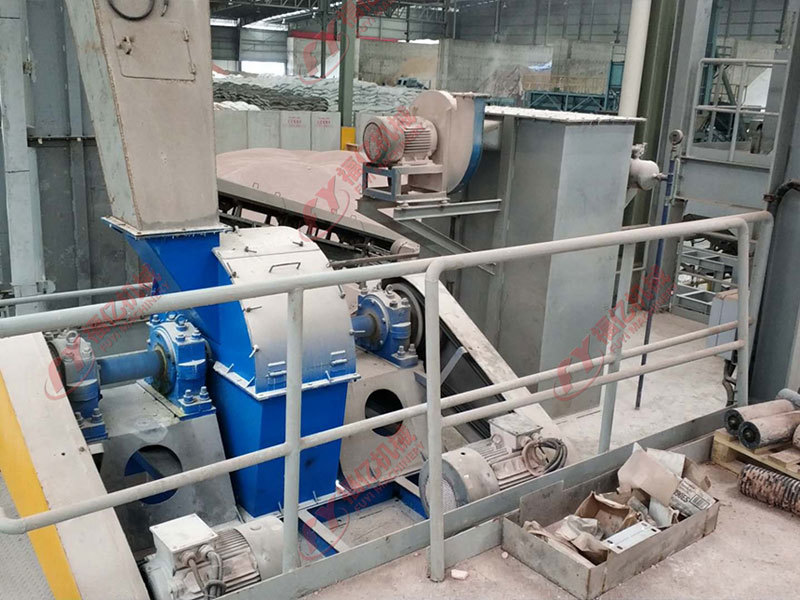
The DG Series Wet Type Double Roller Granulator stands out as a revolutionary machine designed for efficient fertilizer granulation. It employs advanced technology to produce high-density, uniform granules that enhance nutrient delivery to plants.
3.1 Key Features
- **Highly Efficient**: The DG Series is engineered to achieve a high granulation rate, significantly reducing production time.
- **Versatility**: Suitable for various types of fertilizers, including compound and organic fertilizers.
- **Compact Design**: Its space-saving design makes it ideal for facilities with limited floor space.
- **User-Friendly Interface**: Easy to operate, ensuring that even non-technical personnel can manage the granulation process effectively.
3.2 Advantages Over Traditional Granulators
Compared to traditional granulators, the DG Series offers several advantages:
- **Enhanced Granule Quality**: Produces uniform and high-quality granules that improve nutrient release.
- **Reduced Energy Consumption**: Optimized processes lead to lower energy costs.
- **Lower Maintenance Needs**: Built with durable materials, the DG Series requires less frequent repairs and maintenance.
4. The Granulation Process with the DG Series
Understanding the granulation process is essential for maximizing the benefits of the DG Series.
4.1 Preparing Raw Materials
The first step involves preparing raw materials, which should be finely ground to ensure proper mixing and granulation. The right particle size distribution plays a crucial role in achieving uniform granules.
4.2 The Role of Moisture in Granulation
Moisture content is critical in the granulation process. The DG Series Wet Type Granulator utilizes a controlled moisture environment, allowing for optimal binding of materials. This ensures that granules are not only uniform but also exhibit the desired physical properties.
5. Applications of DG Series Granulators in Fertilizer Production
The DG Series is versatile and can be utilized in various applications, including:
- **Organic Fertilizers**: Ideal for producing organic fertilizer granules that enhance soil health.
- **Compound Fertilizers**: Suitable for creating customized fertilizer blends tailored to specific crop needs.
- **Specialty Fertilizers**: Can be adapted for producing specialty fertilizers designed for niche markets.
6. Maintenance and Best Practices for Optimal Performance
To ensure the DG Series operates at peak efficiency, regular maintenance and adherence to best practices are crucial:
- **Routine Inspections**: Conduct frequent checks to identify potential issues before they escalate.
- **Cleaning Protocols**: Implement cleaning procedures to prevent contamination between batches.
- **Operator Training**: Ensure that all operators are well-trained in the proper use and maintenance of the granulator.
7. Frequently Asked Questions (FAQs)
What types of fertilizers can the DG Series Granulator produce?
The DG Series is capable of granulating a wide range of fertilizers, including organic, compound, and specialty fertilizers.
How does moisture affect the granulation process?
Moisture plays a vital role in binding the raw materials together. Too much or too little moisture can negatively impact granule formation.
What are the energy consumption benefits of using the DG Series?
The DG Series is designed to optimize energy use, leading to lower operational costs compared to traditional granulators.
How often should maintenance be performed on the DG Series?
Routine maintenance checks should be conducted monthly, with more thorough inspections at least once a quarter.
Can the DG Series be automated?
Yes, the DG Series can be integrated into automated systems, enhancing efficiency and reducing labor costs.
8. Conclusion
The DG Series Wet Type Double Roller Granulator represents a significant advancement in the field of fertilizer production, offering agribusinesses an efficient solution for granulating fertilizers. With its innovative design, high throughput, and exceptional granule quality, the DG Series is poised to meet the evolving needs of modern agriculture. By leveraging this technology, producers can not only improve their operational efficiency but also contribute to sustainable agricultural practices that enhance crop yields and soil health.
Keywords: dg series wet type double roller granulator

language
English
العربية
বাংলাদেশ
Български
Hrvatski
Česky
Dansk
Nederland
 Esperanto
Slovenski
Filipino
Suomi
Français
Maori
 Shqiptare
Georgian
 Euskara
Deutsch
Ελλάδα
ישראל
इंडिया
Magyarország
Ísland
Indonesia
Irlanda
Italia
日本語
Sovensko
Հայաստան
한국
Kyrgyz
ປະເທດລາວ
 Zulu
Zulu
Latvian
Lithuanian
Luxembourgish
 Latinus
Macedonian
Малайская
Maltese
Монгол улс
 Cymraeg
ဗမာ
 தமிழ்
தமிழ்
नेपाल
Norge
ایران
Polska
Portugal
România
Российская
Србија
 Slovak
Србија
 Slovak
Bosanski
Slovenian
Беларус
España
Sverige
Точик
ประเทศไทย
Türk
Azərbaycan
Uzbek
 Afrikaans
Việt Nam
What we offered to customers shall be our excellent products and distinguished services; our promises to customers shall be above anything else.


 fy@fuyigz.com
 +61 426861120
 Message
