 fy@fuyigz.com
 0086-519-80181222
Share to




News & Events
Understanding the Functionality and Applications of DG to Roll Granulators
Release time: 2025-02-04
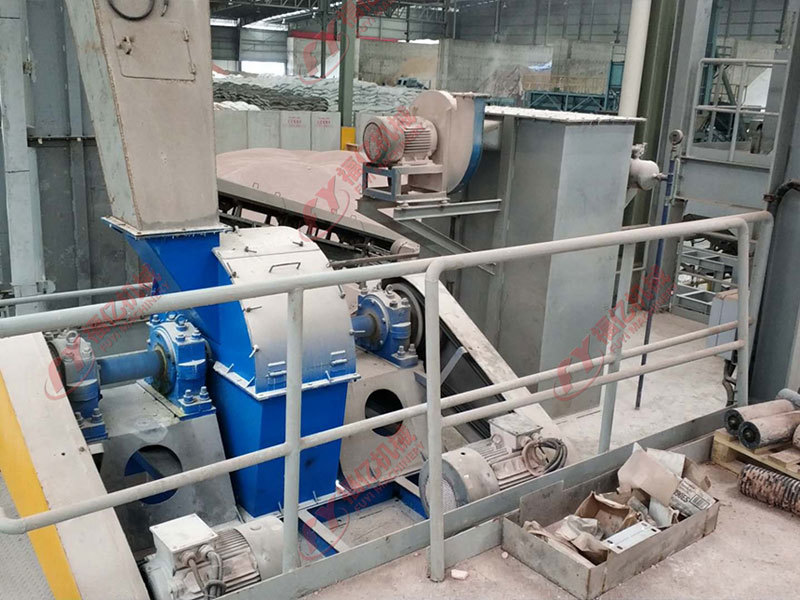
The DG to roll granulator is a specialized machine that transforms fine powder into uniform granules through a rolling action. This equipment operates on the principle of dry granulation, which involves compressing powder materials without the need for liquid binders. The granulator typically consists of two counter-rotating rollers that exert pressure on the powder, compacting it into sheets that are subsequently broken down into granules.
One of the key functionalities of the DG to roll granulator is its ability to produce granules with specific size distributions, which is essential for ensuring consistency in product quality. This granulation process is particularly advantageous as it enhances flowability, reduces dust, and improves the dissolution rates of the final product. Moreover, the granules produced are easier to handle, store, and package compared to fine powders.
This type of granulator is widely used in various industries, including pharmaceuticals, fertilizers, food processing, and chemicals. In the pharmaceutical sector, for instance, the DG to roll granulator is utilized to produce granules for tablet formulations, ensuring uniformity in dosage and enhanced bioavailability of active ingredients. In the fertilizer industry, it helps in creating uniform granules that facilitate even distribution in soil, improving nutrient uptake by plants.
Additionally, the DG to roll granulator finds applications in the food industry, where it is used to produce granulated sugar, salt, or other food additives that require specific particle sizes for better solubility and texture. In the chemical sector, it aids in the manufacturing of granules for various chemical compounds, ensuring consistency in production and quality.
Another notable advantage of the DG to roll granulator is its energy efficiency. By eliminating the need for wet granulation processes, it significantly reduces energy consumption and processing time, making it an environmentally friendly option. Furthermore, the equipment offers flexibility in terms of material processing, allowing manufacturers to granulate various types of powders, including those that are heat-sensitive or moisture-sensitive.
In conclusion, the DG to roll granulator is an invaluable asset in modern manufacturing, providing efficient and effective granulation solutions across multiple industries. Its ability to produce high-quality granules with specific characteristics makes it a preferred choice for manufacturers striving for excellence in product quality and process efficiency. As industries continue to evolve, the demand for such advanced granulation technologies will likely grow, underscoring the importance of the DG to roll granulator in contemporary production landscapes.
One of the key functionalities of the DG to roll granulator is its ability to produce granules with specific size distributions, which is essential for ensuring consistency in product quality. This granulation process is particularly advantageous as it enhances flowability, reduces dust, and improves the dissolution rates of the final product. Moreover, the granules produced are easier to handle, store, and package compared to fine powders.
This type of granulator is widely used in various industries, including pharmaceuticals, fertilizers, food processing, and chemicals. In the pharmaceutical sector, for instance, the DG to roll granulator is utilized to produce granules for tablet formulations, ensuring uniformity in dosage and enhanced bioavailability of active ingredients. In the fertilizer industry, it helps in creating uniform granules that facilitate even distribution in soil, improving nutrient uptake by plants.
Additionally, the DG to roll granulator finds applications in the food industry, where it is used to produce granulated sugar, salt, or other food additives that require specific particle sizes for better solubility and texture. In the chemical sector, it aids in the manufacturing of granules for various chemical compounds, ensuring consistency in production and quality.
Another notable advantage of the DG to roll granulator is its energy efficiency. By eliminating the need for wet granulation processes, it significantly reduces energy consumption and processing time, making it an environmentally friendly option. Furthermore, the equipment offers flexibility in terms of material processing, allowing manufacturers to granulate various types of powders, including those that are heat-sensitive or moisture-sensitive.
In conclusion, the DG to roll granulator is an invaluable asset in modern manufacturing, providing efficient and effective granulation solutions across multiple industries. Its ability to produce high-quality granules with specific characteristics makes it a preferred choice for manufacturers striving for excellence in product quality and process efficiency. As industries continue to evolve, the demand for such advanced granulation technologies will likely grow, underscoring the importance of the DG to roll granulator in contemporary production landscapes.
Keywords: dg to roll granulator

language
English
العربية
বাংলাদেশ
Български
Hrvatski
Česky
Dansk
Nederland
 Esperanto
Slovenski
Filipino
Suomi
Français
Maori
 Shqiptare
Georgian
 Euskara
Deutsch
Ελλάδα
ישראל
इंडिया
Magyarország
Ísland
Indonesia
Irlanda
Italia
日本語
Sovensko
Հայաստան
한국
Kyrgyz
ປະເທດລາວ
 Zulu
Zulu
Latvian
Lithuanian
Luxembourgish
 Latinus
Macedonian
Малайская
Maltese
Монгол улс
 Cymraeg
ဗမာ
 தமிழ்
தமிழ்
नेपाल
Norge
ایران
Polska
Portugal
România
Российская
Србија
 Slovak
Србија
 Slovak
Bosanski
Slovenian
Беларус
España
Sverige
Точик
ประเทศไทย
Türk
Azərbaycan
Uzbek
 Afrikaans
Việt Nam
What we offered to customers shall be our excellent products and distinguished services; our promises to customers shall be above anything else.


 fy@fuyigz.com
 +61 426861120
 Message
